Journal · 13 July 2025
What Are the 4 Types of Transportation?
Land, water, air and pipeline. The four types of transportation explained, with examples, pros and cons, the five modes of transport and the four elements of transport.
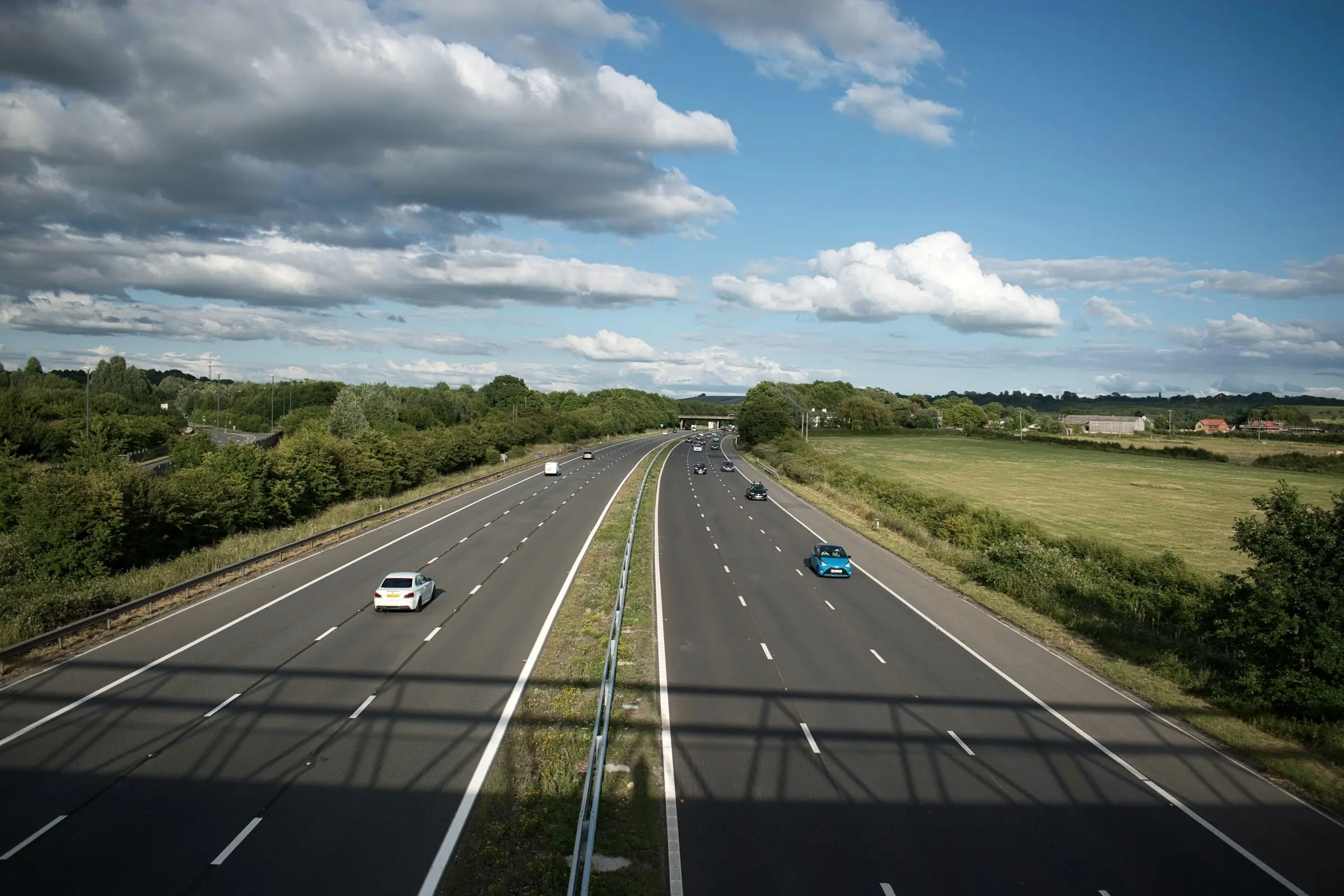
Every journey, whether it’s a parcel crossing an ocean or a family heading home from the airport, relies on one of a handful of ways of moving things from one place to another. Geographers and economists group them into four types of transportation: land, water, air and pipeline.
Here’s how each one works, where it shines, and where it falls short.
1. Land transportation
Land transport moves people and goods over the ground. It’s the type we use most in everyday life, and it splits into two main forms.
Road transport
Cars, buses, coaches, vans and lorries all travel by road. Road transport is the most flexible of all the types, because it can go door to door: from a house to a shop, from an airport to a hotel, or from a farm to a market. It suits short and medium distances, smaller loads and journeys that need to change at short notice. Its drawbacks are traffic congestion, higher emissions per passenger than rail, and a limit on how much a single vehicle can carry.
Rail transport
Trains run on fixed tracks between stations, carrying passengers and freight. Rail is very efficient for moving large numbers of people or heavy loads such as coal, containers and grain over long distances, and it produces far fewer emissions per passenger than cars or planes. The trade-off is flexibility: a train can only go where the track goes, and most journeys need a road connection at each end.
2. Water transportation
Water transport uses the sea, rivers, lakes and canals.
Shipping
Cargo ships carry most of the world’s traded goods. More than 80% of international trade by volume travels by sea, in container ships, oil tankers and bulk carriers. Shipping is slow, but it’s by far the cheapest way to move huge quantities of goods over long distances.
Ferries
Ferries carry passengers and vehicles across shorter stretches of water, linking islands to the mainland and countries to their neighbours. For an island nation like Ireland, ferries to Britain and France remain an important link for travellers and freight alike.
3. Air transportation
Air transport is the fastest way to cross long distances.
Commercial flights
Passenger aircraft connect cities and countries in hours rather than days, making international business and tourism possible on a global scale.
Cargo flights
Air freight is used for goods that are valuable, urgent or perishable, such as medicines, electronics, fresh flowers and seafood. It’s the most expensive type of transport per tonne, and it has the highest emissions per kilometre, so it’s used when speed matters most.
4. Pipeline transportation
What is pipeline transportation?
Pipelines move liquids and gases, such as crude oil, natural gas, fuel and water, through long networks of pipes, usually underground or under the sea.
Advantages of pipelines
Once built, a pipeline runs continuously, day and night, with low operating costs and very little labour. It’s safe from traffic and weather, and it takes heavy loads off the roads.
Challenges of pipelines
Pipelines are very expensive to build, they can only carry certain products, and the route is fixed. Leaks can also cause serious environmental damage, so they need careful monitoring.
Common uses
Natural gas to homes and power stations, crude oil to refineries, and clean water to towns and cities.
Comparing the four types
- Speed: air is fastest, followed by road and rail, with water the slowest.
- Cost per tonne: water and pipeline are cheapest, then rail, then road, with air the most expensive.
- Flexibility: road wins easily, because it’s the only type that goes door to door.
- Capacity: ships and pipelines move the largest volumes, followed by rail.
Environmental impact
Every type of transport has an environmental cost, but they’re not equal. Per passenger or per tonne moved, rail and shipping are generally the most efficient, while air travel has the highest emissions per kilometre. Road transport is a large share of the total simply because there are so many vehicles. Electrification, cleaner fuels and better public transport are all helping to reduce the impact.
What about space?
Space transportation, rockets and spacecraft carrying satellites, cargo and astronauts into orbit, is sometimes added as a fifth type. It’s still highly specialised and very expensive, so it’s usually discussed separately from everyday transport.
Frequently asked questions
What are the 4 types of transportation?
Land (road and rail), water, air and pipeline.
What are the 5 modes of transportation?
When road and rail are counted separately, the five modes are road, rail, water, air and pipeline.
What are the 4 elements of transport?
The way (the route or infrastructure), the vehicle (what carries the load), the motive power (what moves it) and the terminal (where journeys start and finish).
Which type of transportation is the cheapest?
For heavy goods over long distances, water is usually the cheapest per tonne, followed by pipeline and rail. Air is the most expensive, but also the fastest.
Transport in Ireland
You can see all four types at work in Ireland: ferries and cargo ships at Dublin Port, InterCity trains linking the main cities, flights in and out of Dublin and Shannon, and gas pipelines connecting Ireland to Britain.
And when you’re the one travelling? We’d suggest the most comfortable version of road transport there is: a private car with your own chauffeur, door to door. Find out more about our private chauffeur service in Ireland, or plan your journey.
Plan your journey
Your journey through Ireland starts here.
Tell us the date, the pickup and who’s travelling, and we’ll come back with a personal quote and the perfect car. No obligation, no pressure.